How do you organise an exhibition?
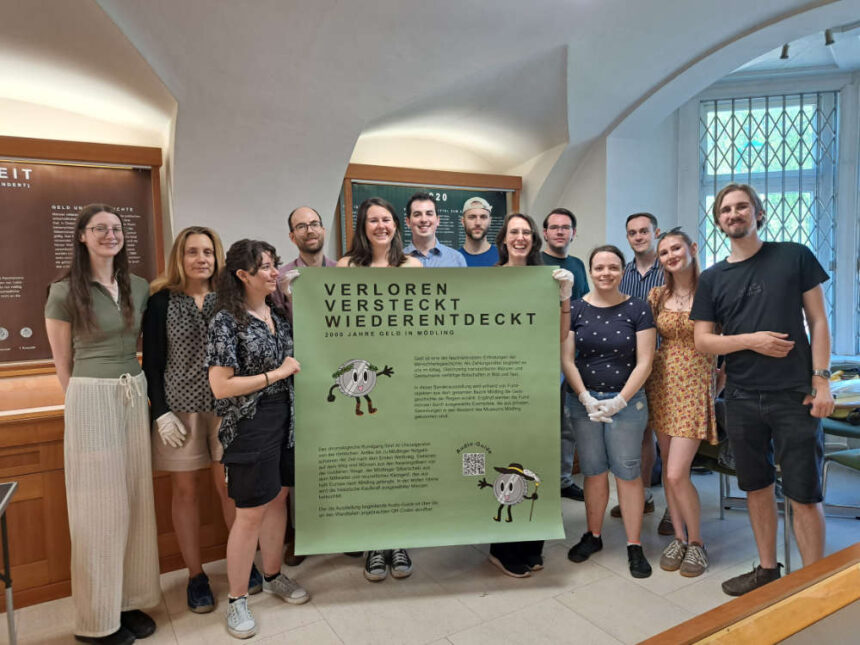
How do you organise an exhibition? Students at the Institute of Numismatics and Monetary History at the University of Vienna are regularly faced with this question. Organising an exhibition is part of their learning process as part of their numismatics degree.
But this time, it turned out to be one that can be seen beyond the Institute’s own limited premises.
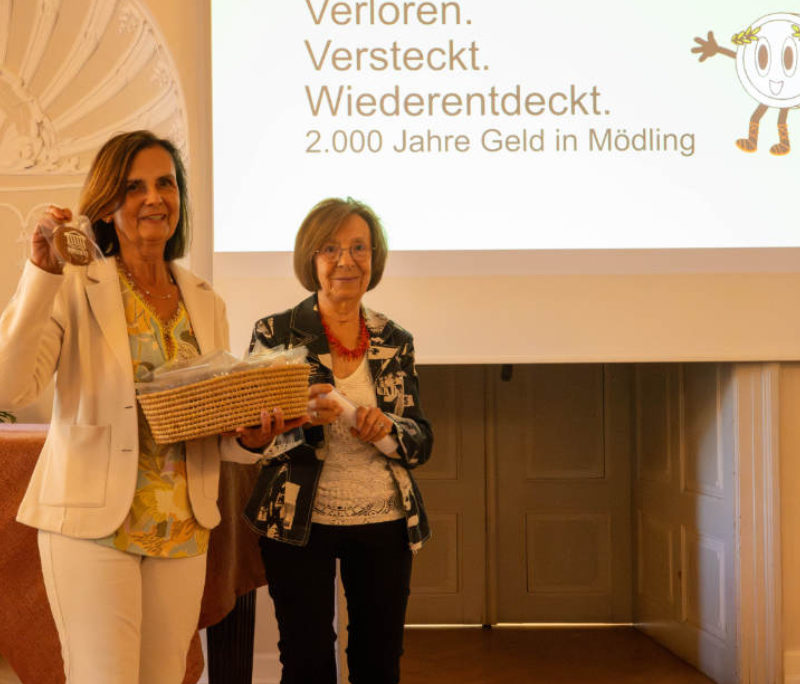
The Mödling Museum Association
How did this come about? During an excursion, the students met the extremely energetic Eleonore Strebel from the Mödling Museum Association. And as is often the case when people with the same passion come together: ideas are born that spark exciting and meaningful projects.
One exhibition: two seminars over two semesters
Over two consecutive semesters, a seminar on exhibition design, worth 5 ECTS credits each, took place at the Institute for Numismatics and Monetary History. This also involved on-site research: following visits to numismatic exhibitions in Vienna, numerous students discussed the questions: What is important to us for our exhibition? And what seems negligible to us?
To find a meaningful answer to this, they first needed to narrow down the theme for their own exhibition. The theme was defined by the title: “Lost – Hidden – Rediscovered. 2,000 Years of Money in Mödling”.
Following this, the designs for the display case contents were developed and the accompanying texts were drafted, which were subsequently revised by Helmut Lotz and Max Resch.
Every exhibition needs sponsors!
Even though many aspects of this exhibition were carried out free of charge by the students and the Mödling Museum Association, it soon became clear that we couldn’t manage without sponsors. In my opinion, finding sponsors is one of the most difficult tasks involved in organising an exhibition. In times of high inflation and stagnating profits, the students managed to persuade the Money Museum of the Austrian National Bank, the H. D. Rauch auction house and Schöller Münzhandel to contribute financially or in kind.
The Implementation
The first semester concluded with the successful search for sponsors. Now came the task of turning the concept into a real exhibition. This took place during the second module of the summer term 2026. The final selection of objects, following a preliminary review of those available, was made and photographed by Max Resch. It had already been agreed during the concept development phase that an audio guide was an essential component. The students devised the content, wrote the texts and then recorded the audio themselves. Much of the text from the audio guide and the display case labels was included in the exhibition brochure.
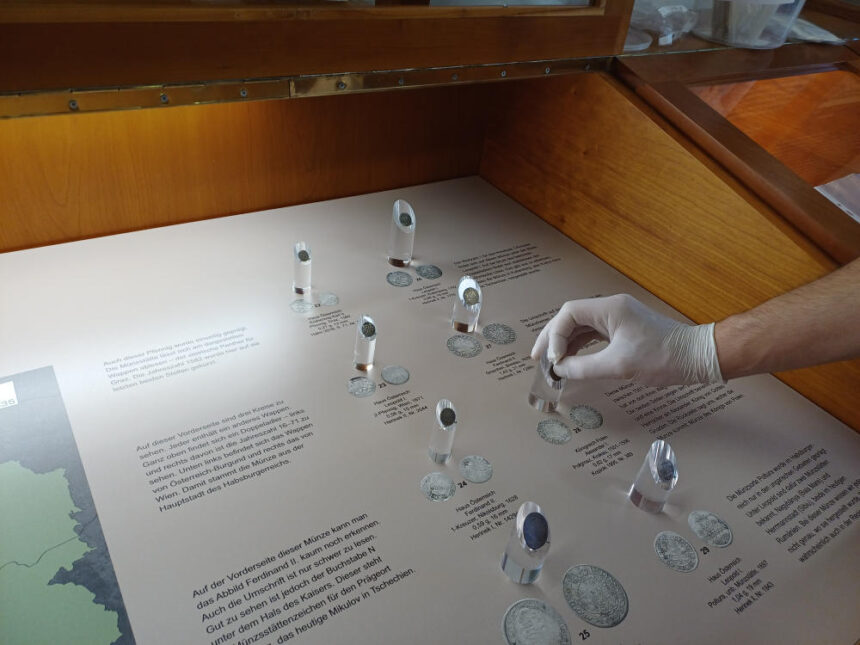
The exhibition was finally set up by the students, with the support of members of the museum association.
Opening
I was there in person at the exhibition opening and could see just how delighted the students were with their exhibition and the positive feedback from visitors. The exhibition runs until 10 October 2026. Further information is available on the museum’s website.
Text and images: Andrea Pancheri