Tokyo International Coin Convention (TICC) 2026
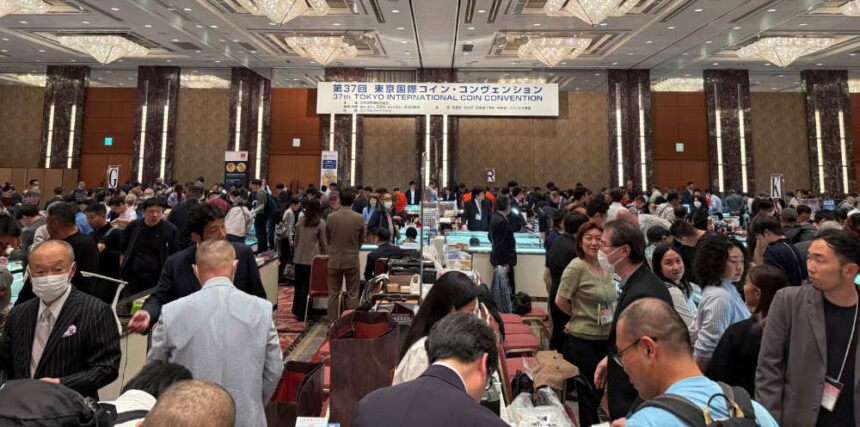
Japan is a world unto itself, with its own set of rules. These also apply to the Tokyo International Coin Convention (TICC). Not only is the event superbly organised, but the organisers also expect all participants to abide by the established rules. The opening ceremony therefore takes place in complete tranquillity, without the waiting crowd disrupting the formal proceedings. Everyone queues up obediently everywhere, whether it’s for a special issue coin on offer or the popular tickets for the numismatic lottery. No one pushes in. The dealers stand behind their tables at the designated times; no one leaves early, but everyone waits until the end of the event. And then everyone clears away their own rubbish, sorted by material, and takes it to the designated collection point. What is taken for granted in Japan is something many German trade fair organisers can only dream of.
Host country: Spain
In terms of its concept, the TICC is a blend of the World Money Fair in Berlin, the NUMISMATA in Munich and the American Numismatic Association’s World’s Fair of Money. In other words: every year, collectors and dealers of both classic and contemporary coins gather here; mints and Japanese collectors’ associations are also involved, ensuring a colourful and attractive programme.
Each year, there is a guest country whose mint is not only prominently featured during the opening but also organises an exhibition showcasing its current coins.
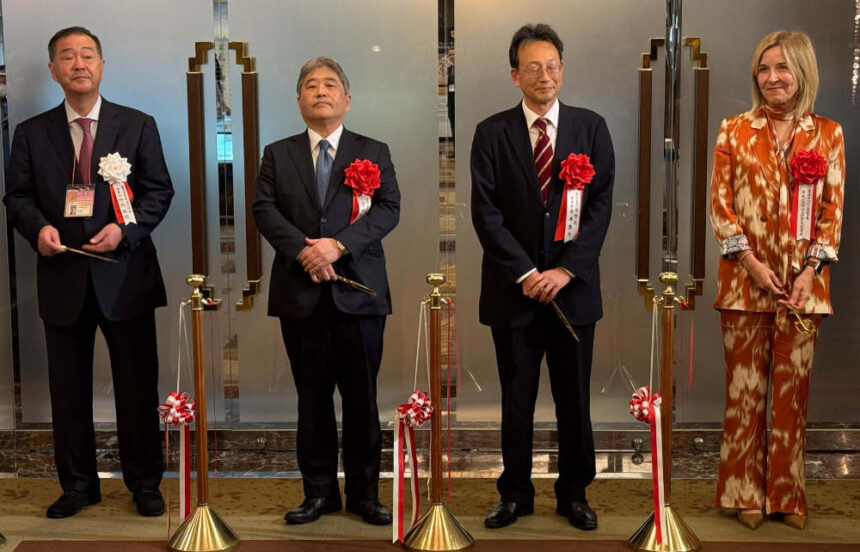
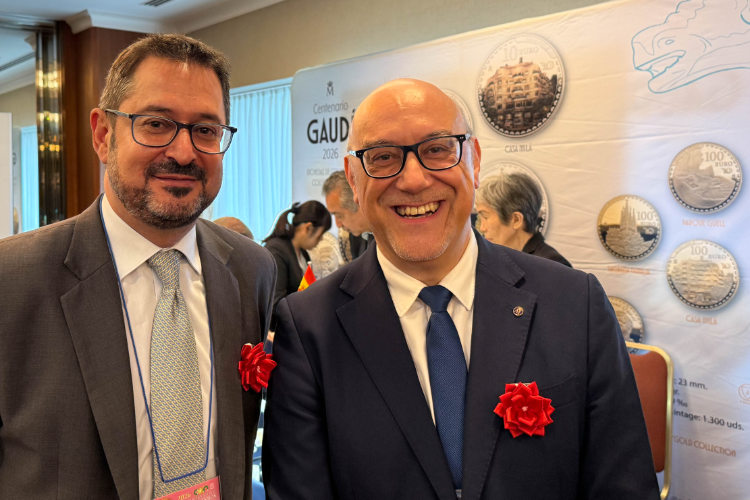
This year, it was the Fábrica Nacional de Moneda y Timbre (FNMT) that took centre stage. Mint Director María Isabel Valldecabres Ortiz stood out, colourful and cheerful, against the black-and-white monotony of the men who, as every year, opened the TICC. Traditionally, these are – alongside a representative of the host country – the President of the Japan Coin Dealers Association (Mr Yuji Takeuchi), the President of the Japan Banknote Printing Corporation (Mr Naoki Kawamura) and the President of the Japan Mint (Mr Yasuo Hirai).
The rush for coins
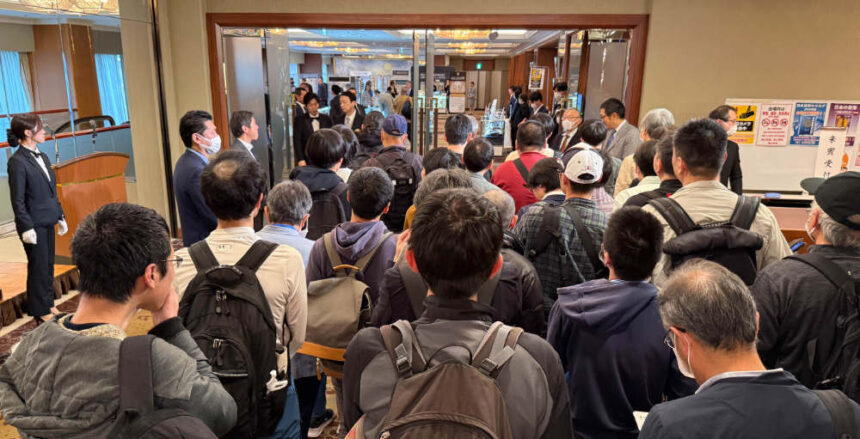
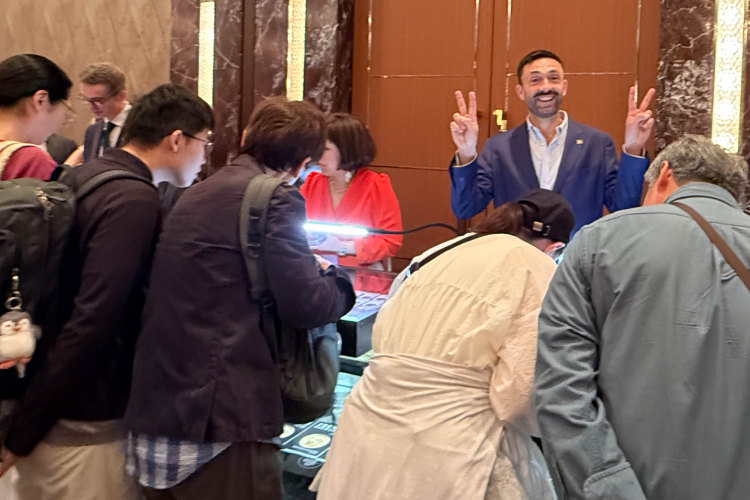
What follows is a familiar sight at many other coin fairs: collectors practically rush into the hall to snap up the finest pieces at the best prices. A highly interested, numismatically well-informed audience of collectors besieges the coin dealers’ stands. The dealers can look forward to numerous sales, particularly in the two- and three-figure euro range, but also in the five-figure range – though these tend to be to Japanese dealers. They take the opportunity to restock their supplies from their foreign colleagues before the public floods into the hall.
As a result, the hall is actually well attended throughout the entire event, from 1 to 3 May. At the start, it is filled exclusively with experienced collectors; but the longer it goes on, the more women, children and families fill the hall. After all, the Royal Park Hotel, where the event is being held, is not only conveniently located but also situated in a very popular residential and shopping area for the affluent Japanese middle class. Many passers-by are tempted by the free admission to simply pop in and see what is happening inside. Some of them may well have discovered coin collecting as a hobby and an investment opportunity for themselves in the process. The exhibition is divided into three main areas. First, there is the hall dedicated to mints, featuring exhibitions on the guest country, the Japanese Mint and the Japanese Banknote Printing Bureau.
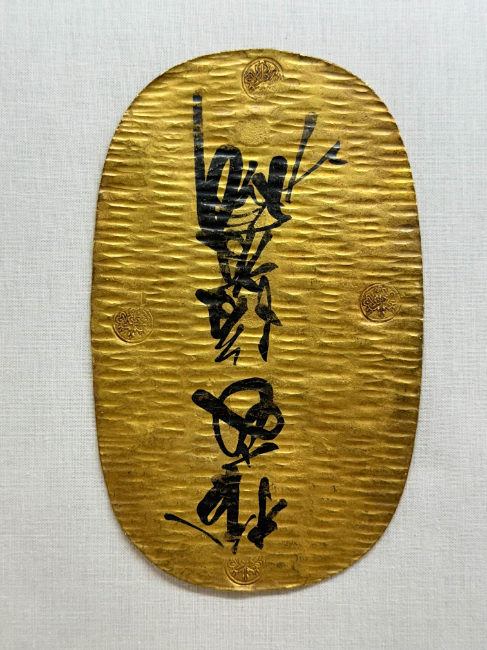
Above all, the exhibition at the Japanese Mint is always small but of the highest calibre. After all, it boasts a first-class coin collection, which it showcases not only in the mint museums in Osaka and Saitama. It regularly brings a selection of exquisite pieces to the TICC.
The piece shown here is a special variant of the Tensho Oban. Hideyori Toyotomi probably used this special gold coin to pay for a tiny fraction of the cost of erecting a Buddha statue that is very well known in Japan.
For Kyoto, too, once had a huge wooden Buddha statue that stood guard over a massive hall. 60,000 workers built the structure, which stood 49 metres high, 88 metres long and 54 metres wide. The statue was commissioned by Hideyoshi Toyotomi, one of Japan’s great unifiers. During his lifetime, he faced many disasters. One of these was a massive earthquake in 1596 that destroyed his statue. “What sort of Buddha is this, that breaks so easily in an earthquake?” Hideyoshi is said to have remarked.
His son, Hideyori Toyotomi, repaired the damage and commissioned a new Buddha, this time made of bronze. The colossus was completed in 1612, just three years before the attack by Tokugawa Ieyasu, the first shogun of the Tokugawa clan. He defeated his rival Toyotomi Hideyori and forced him to commit seppuku. For the Japanese, this Oban is therefore not simply a gold coin, but a testament to a pivotal event in their history.
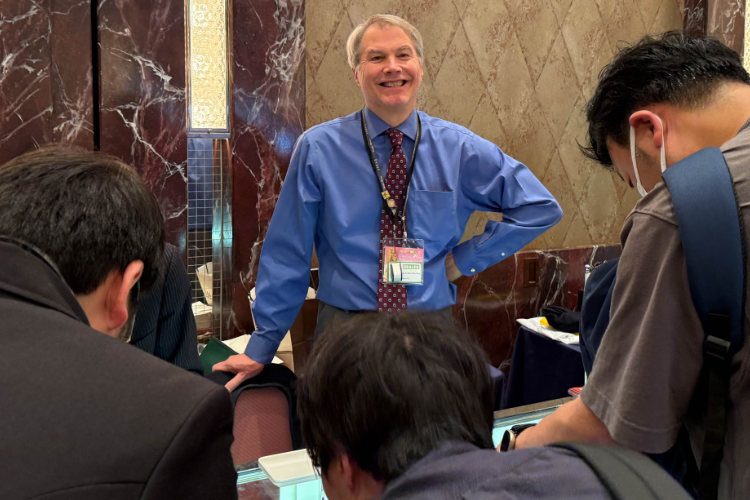
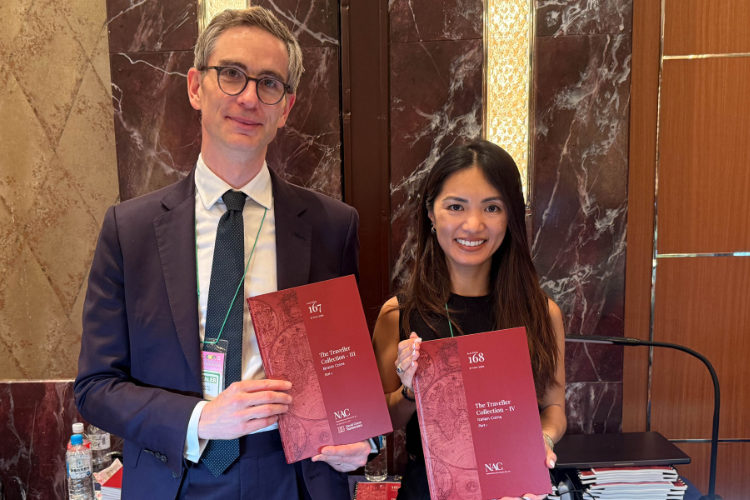
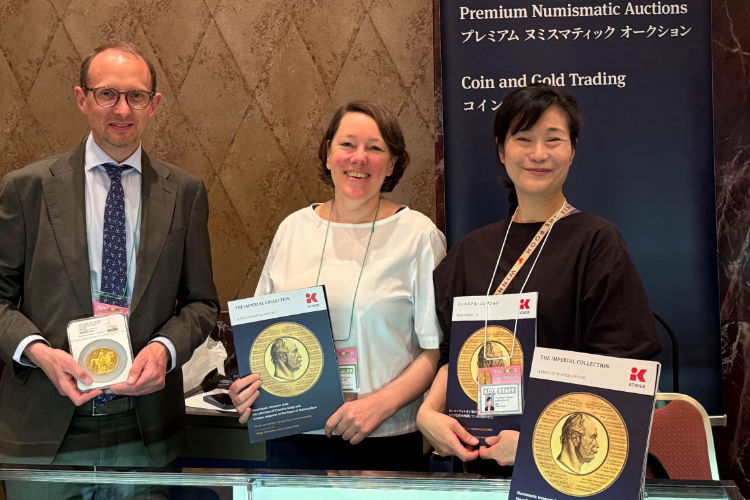
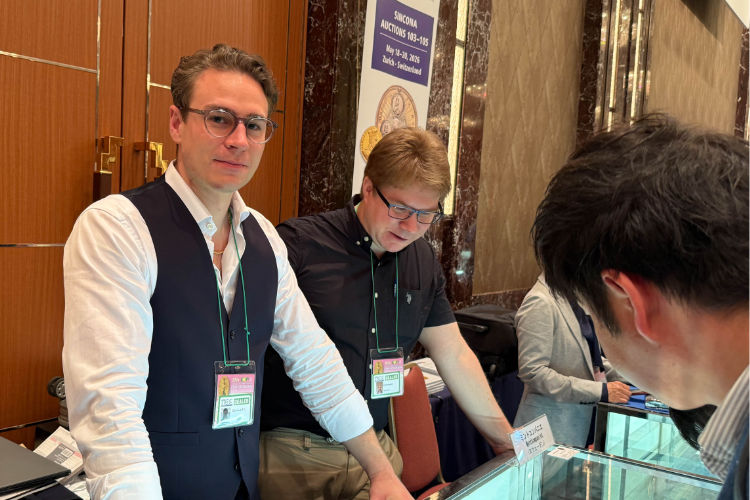
The second hall, which is always packed, is home to coin dealers from both home and abroad. It is not just Asian colleagues who attend. Numerous European and American coin dealers make the long (and, due to rising airfares, now very expensive) journey to attend the event. They have a good reason for doing so: Japanese collectors are known for being particularly keen to buy coins in the high-price segment. And selling these is particularly profitable for coin dealers.
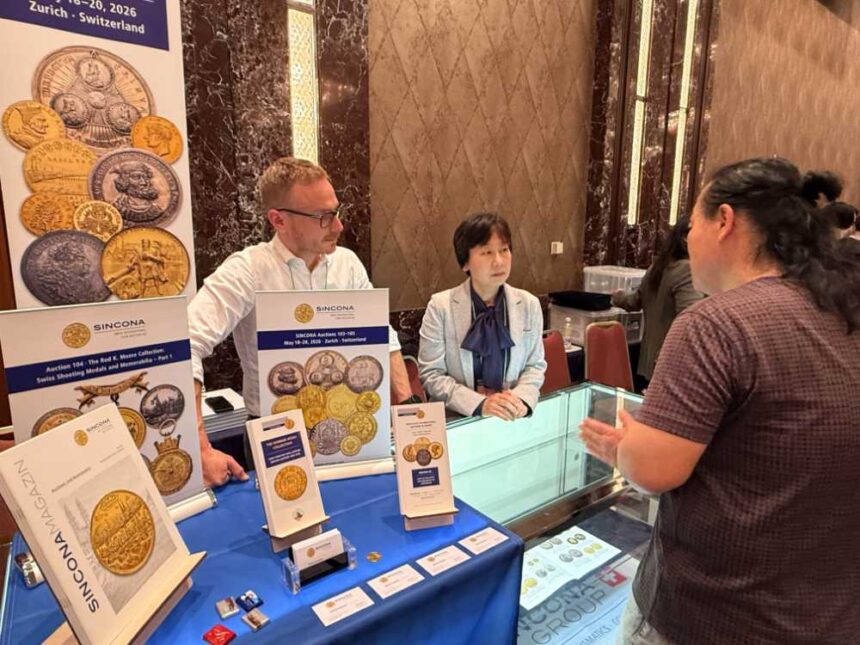
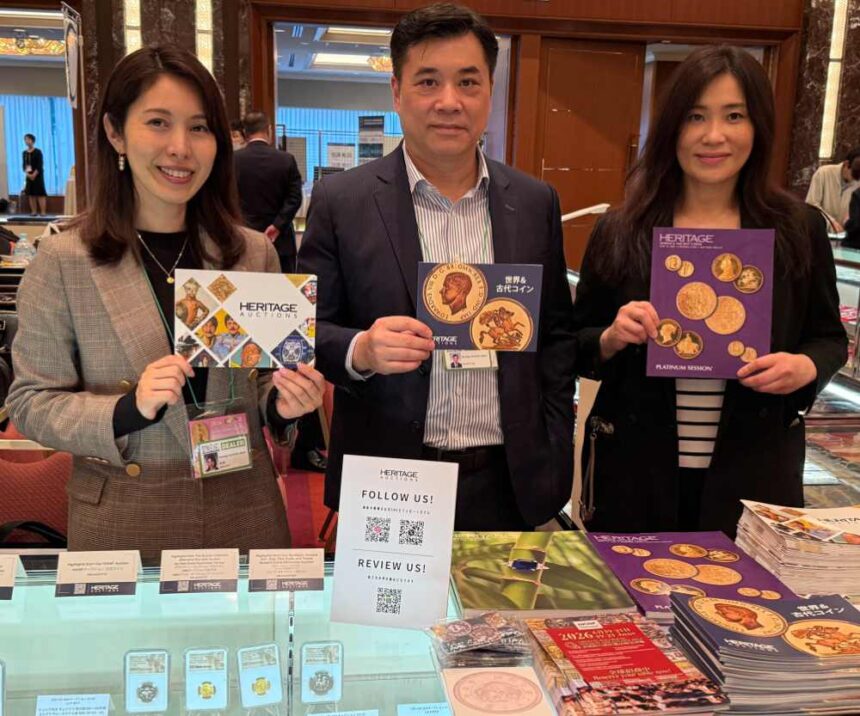
Many auction houses have taken this on board and opened their own permanent offices in Japan. The American auction house Heritage, for example, has a branch in the heart of Tokyo where potential bidders and consignors can seek advice in person and in their native language. Naturally, the team was also on hand during the TICC. Events organised as part of the TICC take place in another hall. This is where collectors wait to purchase the special commemorative coins regularly offered during the TICC, where they attend talks by the Japan Coin Collectors’ Association, and where some collectors display coins from their collections.
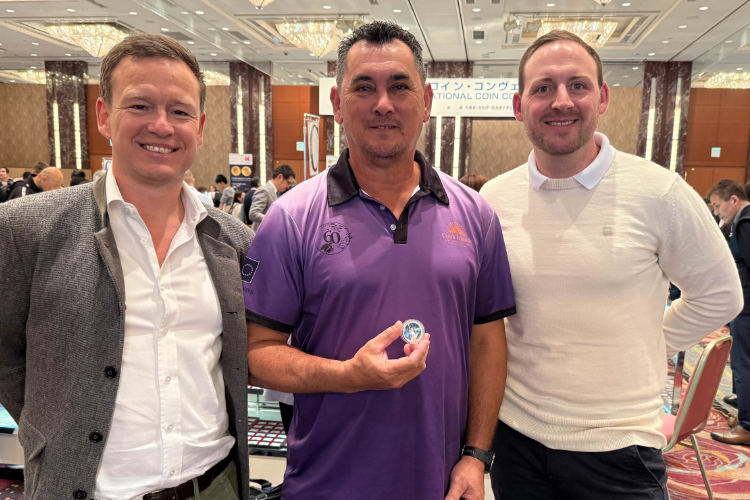
Most importantly, however – as is the case everywhere in the world – it’s all about the connections. The TICC offers plenty of space and time for this. It’s a mix of old and new friends that you meet at the TICC in Japan.
If you’re thinking of going too: there’s a long waiting list for coin dealers who want a table. But don’t be put off. Every now and then a spot becomes available. It’s a bit easier for mints, as there’s still a little space left in their hall. For trade visitors? Absolutely! Don’t hesitate! And under no circumstances should you miss the secret meeting place of the international coin trade: the Launch at the Royal Park Hotel on the top floor.
When is the next TICC taking place? Unfortunately, this is always announced relatively late on the website of the Japanese Coin Dealers’ Association. But there’s a good chance it will be at the start of the next Japanese Golden Week, which begins with Showa Day on 29 April 2027.
Text and images: Ursula Kampmann