Understanding historical coinage
Historical coinage is a central theme in numismatics and plays a crucial role for collectors of ancient and medieval coins. In particular, the so-called hammer minting was the most important technique for producing coins for many centuries.
From the earliest ancient coins right through to the Middle Ages, every coin was struck individually by hand. This resulted in an enormous variety of shapes, strike qualities and individual characteristics. It is precisely these qualities that make historical coins so fascinating today for collectors, dealers and historians.
The origins of historical coinage
The history of coinage began in the 7th century BC in Asia Minor. From there, the technique spread rapidly throughout the Greek and Roman worlds. Coins served not only as a means of payment, but also as a means of political communication. Rulers used them to convey power, stability and religious messages.
Hammer minting remained the dominant method throughout the Middle Ages as well. Despite regional variations, the basic principle of coin production remained virtually unchanged for centuries. It is precisely this continuity that is of particular interest to modern-day collectors, as it allows for comparisons between different eras.
How does hammer striking work?
The hammer striking of coins is a relatively simple yet technically demanding process. First, a metal blank, also known as a coin blank, was prepared. This was usually made of silver, gold or copper and was often heated before striking.
The blank was placed on a fixed lower die. The upper die was then positioned on top and struck with a hammer. The force of the blow transferred the coin’s design onto both sides of the metal.
The quality of the result depended heavily on the coin maker’s experience. A precise strike was crucial to producing a clear and complete coin design.
Typical characteristics of historical coins struck by hand
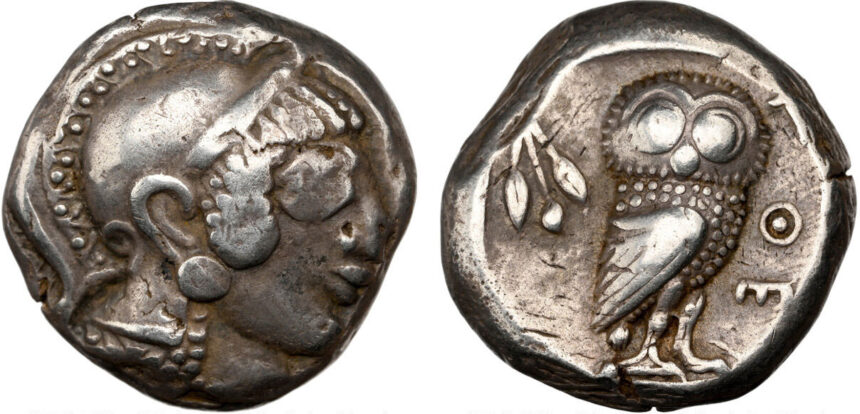
Unlike modern coins, hand-struck coins display numerous characteristic features. These include irregular shapes, slightly misaligned designs or variations in material thickness.
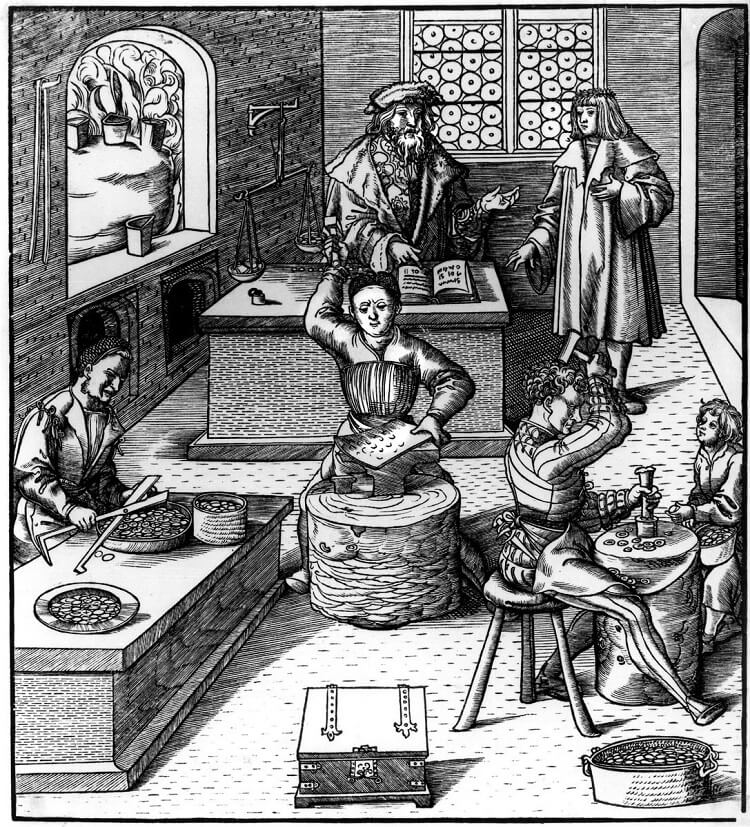
These characteristics are not defects in the strict sense, but direct consequences of manual production. For collectors in particular, they are an important distinguishing feature for telling genuine historical coins apart from modern reproductions.
The impact of strike quality on the value of historical coins
A particularly important factor in collecting historical coins is the quality of the strike. It has a significant influence on the coin’s current market value.
A coin with a strong, clean strike usually displays a complete and well-centred design. Details such as lettering, portraits or coats of arms are clearly visible. Such pieces are particularly sought after by collectors and often fetch higher prices.
If, on the other hand, the strike is too weak or misaligned, important parts of the design may be missing. In such cases, the coin’s appeal often diminishes, which is also reflected in the price. It is particularly critical if key information such as the ruler’s name or mint mark is no longer fully visible.
At the same time, it is important to note that not every irregularity has a negative effect. Slight misalignments or typical minting characteristics are often accepted in ancient and medieval coins. In some cases, conspicuous minting errors can even arouse the interest of specialist collectors.
The Art of Die Engraving
A central aspect of historical coinage was the production of the dies. These were engraved by hand in a painstaking process. The design had to be carved into the metal in a mirror image, which required a high degree of precision.
The quality of the engraving directly influenced the appearance of the coins. Many ancient coins are therefore not only a means of payment, but also small works of art with impressive detail.
The Limits of Hammer Minting in the History of Coinage
As trade volumes increased, hammer minting reached its limits. Production was slow and quality was difficult to standardise. This led to the development of mechanical minting processes in the early modern period.
Nevertheless, hammer minting remains a central part of the history of coinage and is indispensable for understanding historical currencies.
Significance for collectors and numismatics
In numismatics, the hammer strike provides important clues regarding the dating, provenance and authenticity of coins. The shape, quality of the strike and details of the coin’s design enable precise classification.
For collectors, this means that each coin must be considered individually. The quality of the hammer strike in particular plays a central role here, as it influences both the aesthetic impact and the market value.
Why hammer minting is still relevant today
Historical coin minting using the hammer minting technique is far more than just an outdated manufacturing process. It is key to understanding past cultures and economic systems.
For collectors, it offers a unique combination of history, craftsmanship and value appreciation. Every coin tells its own story – and that is precisely what makes them so fascinating.