The Carl Ludwig House on the Raxalpe and tourism in Austria
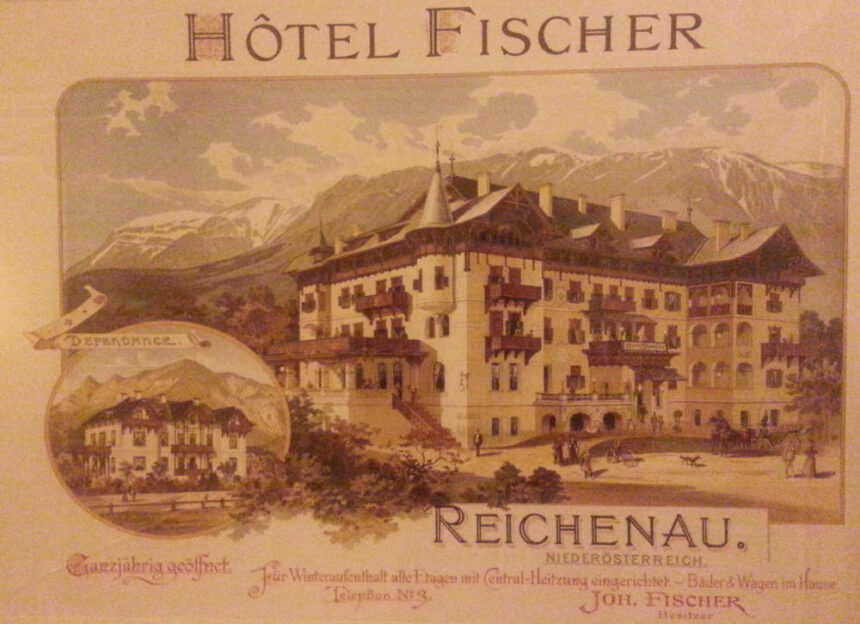
It is summer. Ideal weather for hiking. Archduke Carl Ludwig sets off on a hike with his family. It takes him from his villa in Reichenau an der Rax right into the high mountains. Like so many Viennese, Carl Ludwig has discovered a passion for mountaineering ever since the Semmering Railway, which opened in 1854, began taking him so quickly from Vienna to the Alps. He is an experienced mountaineer, but now he begins to feel anxious: a weather front is rolling in, and he has his sons with him. They just manage to reach a simple alpine hut. There they will spend the night, uncomfortable but safe.
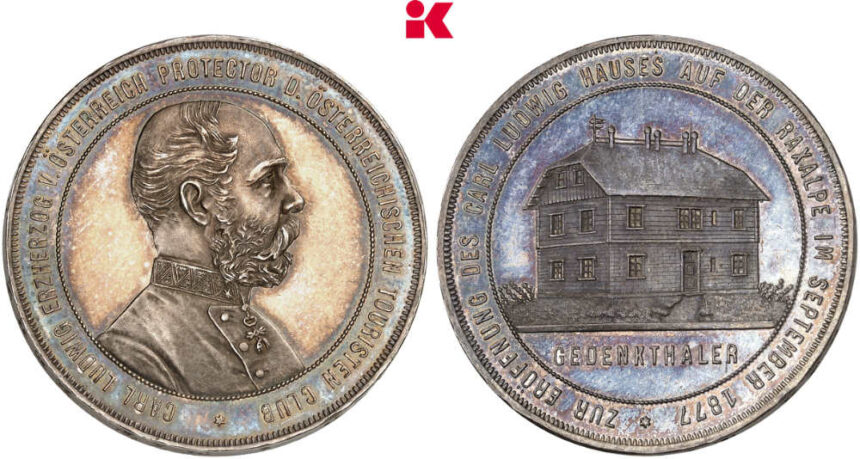
Did it actually happen that way? We do not know. In any case, Carl Ludwig later recounted that this experience prompted him to support the construction of a refuge on the Raxalpe and to allow it to be named after him. Today, the Carl Ludwig Haus holds significance not only for mountaineers but also for numismatists: For this simple shelter is depicted on rare Austrian commemorative coins, 100 of which were struck in Silver to mark its opening. The specimen offered by Künker comes from the collection of Commercial Councillor Dr Herbert Wenzel, who purchased it in 1956 from the London firm Seaby.
What can be seen on the ‘Raxalpe’ commemorative thaler?
The obvers does not (!) depict Emperor Franz Joseph, as is customary, but his younger brother, Carl Ludwig. He is wearing a simple uniform tunic and the Order of the Golden Fleece around his neck. The legend reads CARL LUDWIG ARCHDUKE OF AUSTRIA PROTECTOR OF THE AUSTRIAN TOURIST CLUB.
The revers shows – in great detail – the new mountain refuge on the Raxalpe, with the inscription ‘GEDENKTHALER’ in the exergue. The legend reads: ‘TO MARK THE OPENING OF THE CARL LUDWIG HOUSE ON THE RAXALPE IN SEPTEMBER 1877’.
The Südbahn and Austrian tourism
The Südbahn – the Semmering Railway refers only to a section of this route – not only connected Vienna with the port of Trieste, but also became a driving force behind tourism.
The Alpine regions in particular, which had hitherto benefited little from the industrial boom, hoped to reap substantial profits. The mountains were a magnet for tourism. Ever since English mountaineers had popularised this pastime quite throughout Europe, it had evolved into a profitable industry. Influential citizens banded together to form tourism associations in order to jointly create the necessary infrastructure. They marked out hiking trails, built mountain huts and promoted their region both at home and in foreign countries.
Having a connection to a member of the imperial family was a real coup in this regard. Ischl, for example, owed its reputation to the fact that Sophie, who had remained childless for many years, received her ‘Salt Prince’ here – the man we know as Emperor Franz Joseph I. The Austrian Tourist Club, which sought to develop the tourist destinations along the Southern Railway, therefore sought contact with Carl Ludwig, who had owned a villa in Reichenau since 1872. As a member of the imperial family, Carl Ludwig had a veritable moral obligation to promote tourism as an Austrian economic sector wherever he could.
Funding and Construction of the Carl Ludwig House
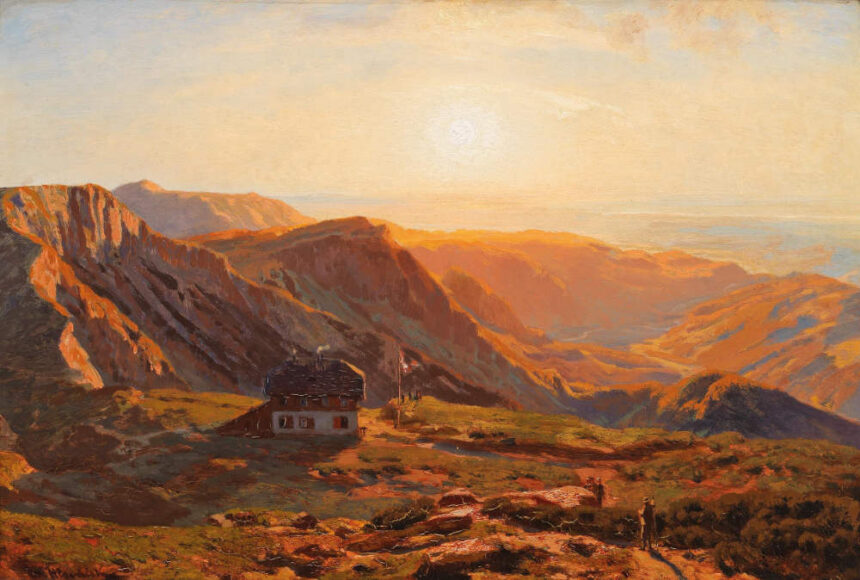
Today, Josef Peter Rabl – a mountaineer from Vienna, member of the Austrian Tourist Club and author of numerous works promoting alpinism – is regarded as the person who, in 1874, suggested building a mountain hut on the Raxalp. The costs were estimated at 10,000 gulden. The General Assembly of the Austrian Tourist Club made the funds available in early 1876. In July of the same year, the Executive Committee persuaded Archduke Carl Ludwig to take on the patronage of the project. He agreed, donated 1,000 gulden himself and laid the foundation stone on 10 September 1876.
Construction progressed so rapidly that the building was already serving as accommodation for winter sports enthusiasts in the winter of 1876/7, even though it had not yet been officially opened.
The official opening
On 16 September 1877, more than 600 people – as Carl Ludwig had requested, not in courtly gala dress but in country or mountain attire – made their way up to the Raxalpe to participate in the opening ceremony of the Carl Ludwig House. Unfortunately, the archduke was unable to attend. He sent his two eldest sons in his stead: Archduke Franz Ferdinand – yes, that’s right, the heir to the throne who was shot in Sarajevo – and Archduke Otto Franz, later known as the ‘fine archduke’. At the time, they were only 13 and 12 years old respectively and were praised by everyone present for having ‘made the ascent despite the hurricane-force storm’, as recorded in the 1877 ‘Communications’ of the German and Austrian Alpine Clubs.
A report on the Paris World’s Fair dated 20 July 1878 illustrates the central role played by the Carl Ludwig Hut in tourism. From this report, we learn that the two Austrian tourist associations had erected their own pavilion there, which showcased the beauty of the Austrian Alps to visitors. Now available were not only pictures but also nine panoramic photographs, one of which showed the Carl Ludwig House on the Raxalp.
A commemorative thaler without the Emperor’s portrait! Is it even a commemorative coin?
That is an extremely good question, because in Austria the gulden was actually the currency in use, with 1.5 Austrian gulden equalling one Prussian taler. Of course, the (Prussian) taler did not exist in the year 1877. So why does the word ‘Gedenkthaler’ appear so prominently on the piece?
Ultimately, we cannot resolve the issue; we can only point to parallel developments. In Switzerland, for example, shooting clubs issued so-called ‘Schützentaler’ during a number of federal shooting festivals. These served two purposes: firstly, they could be used to make payments during the festival; and secondly, when purchased for collection purposes, they helped to finance the festival. Here, too, we have a festival; here, too, we have an association that relied on donations and membership fees. So why shouldn’t they have resorted to this tried-and-tested means of financing?
The fact that Commercial Councillor Dr Wenzel, from whose collection this perfectly preserved piece originates, purchased it from Seaby in London would fit this theory perfectly. After all, a large proportion of the alpinists came from Merry Old England. What could be more natural than for one of them to have bought the coin for his collection whilst on holiday in Austria, so that it entered the British coin market after his death?
What is the Raxalpe commemorative thaler worth?
Künker has set the starting price for the lot at 10,000 euros. This is roughly half of what a comparable piece fetched at Künker in the year 2019.
The silver “Raxalpe” appears relatively frequently on the auction market, considering its tiny edition. The prices achieved typically range between 8,000 and 19,000 euros. For bronze pieces – of which Coinarchive is aware of only three – prices of up to 30,000 euros have been achieved.
It is interesting to note that the prices achieved for graded specimens and/or those sold in the USA are not higher, but tend to be lower. This is a good indication that the “Raxalpe” has so far only been of interest to collectors, not to investors.
Given this low edition, that could change at some point. We will report on the price realized.
Text and images: Ursula Kampmann